Sunday, 21 November 2010

What lies beneath

Sometimes it feels like everything in Australia is out to get you. Poisonous snakes, jumping spiders, hungry crocs…all these are obviously dangerous but it is not these that are most likely to prematurely end your visit Down Under – drowning, evidently, is what you really want to worry about.

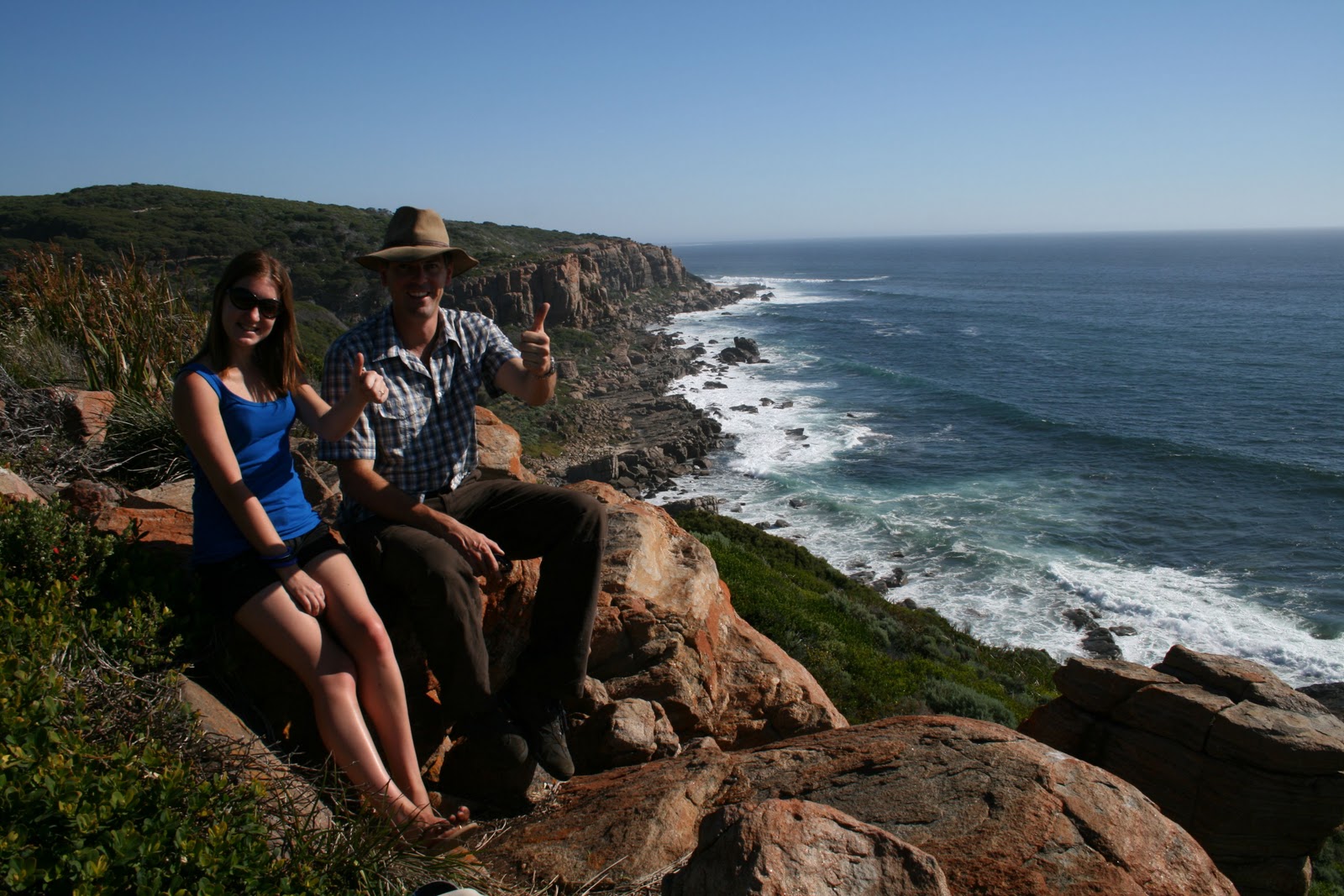
Today as I gazed out at yet another sweeping sea view (this time in the Torndirrup National Park near Albany) I fell into conversation with a local who casually started telling me all about rip tides and king waves. Australia can’t just have waves and currents you see, it has to have those added-value adjectives, the ones which hint at the possibility of death in the blink of an eye. More people die from drowning in WA each year than from all the poisonous species you could name put together. People have been happily standing on the coast here one minute, and washed away by a king wave the next. The sea is a terrifying place.

I spent my day finding out how the sea has impacted Albany and exploring the maritime history of this area and have discovered that it is really is littered with wince-worthy stories of death, dismemberment and disaster. At Whale World I heard not only tales of flensing the blubber from a sperm whale (which was disturbing, naturally) but also of legs being cut off by stray harpoons and deckhands being grabbed by a tentacled squid arm and drawn into the icy depths never to be seen again. At the Brig Amity, a replica of the ship which brought the first European settlers ashore here, there were stories of scurvy, disease and the dispossession of the indigenous people; while the Residency Museum told tales of difficult beginnings and environmental blunders.


But despite its difficult beginnings Albany is far from a negative place. When whaling ended here in 1978 the community sank into economic depression but there is no evidence of this today. Everyone I’ve met here has been very proud to be from this small city marooned on the south coast 400km from Perth and indeed, why shouldn’t they?

The city is set on a beautiful bay within easy striking distance of not only the coastal Torndirrip national park but also the mountainous Stirling Ranges and the rolling Porongurups. The attractions in town have been top-notch too. The Residency Museum is the only place I’ve seen so far to place Aboriginal history directly alongside European, showing how the two mirror each other and helping people understand the issues all the better; the nighttime tour of the Old Gaol with its amateur theatrics and spooky cell visits was the most fun I’ve had sans alcohol on any evening in recent history; and Whale World presented a difficult subject in not only an enlightening way but also a fascinating one, allowing visitors to independently explore an old whaling ship and make up their own minds about the whaling industry.

All in all I’ll be sad to leave Albany tomorrow - and not just because this is by far the largest place I’ll see for some time. The people here have been so welcoming and so keen that I should go away with a positive view of their home that I can't help but promise them I'll be back. I'll be sure to keep that promise.

Saturday, 20 November 2010

When travel itineraries attack

One of the easiest mistakes to make while travelling is to try to fit too much in and yesterday I definitely fell victim to the overstretched itinerary. As anyone who knows me will attest, I’m not one to take it slow and I do tend to travel at breakneck speed (even for a guidebook writer) so when I planned to make five stops and travel 500km in one day I thought I could handle it. Turns out I was wrong.

I left Margaret River around 8am and dashed south to make the first tour of the day at Cape Leeuwin lighthouse. I climbed its 176 steps with a lovely German couple I regretted offering to take a picture of (they posed for far more than was strictly polite) and a family of what turned out to be complete bogans. Anyone unfamiliar with Aussie slang may have to look that one up but its meaning may become clear when I say that the three grubby kids all climbed the tower in bare feet.

It was spectacular though. We could get outside on the walkway at its top and see for miles over the Southern and Indian oceans (this is where they meet). There was even a pod of dolphins playing in the surf just offshore, as if on demand just for us.

But I didn’t have time to soak it up. Back in the car it was two hours to the Gloucester Tree (an old fire watchtower you can climb up on metal poles sticking out from its sides), which I barely had time to call in at, and then another half an hour to Northcliffe and the Understory Sculpture Walk. WA was having its hottest November day in seven years or something (being so close culturally to us Brits, this of course made the paper) and I had chosen the peak of the heat to climb out of my air-conditioned bubble and walk 1.2km. Fortunately most of the sculptures were among the trees so shade was abundant and the MP3 player soundtrack meant it was easy to learn about the artwork without too much concentration. There were sculptures of all kinds, from carved wooden seats to thrusting metal flowers wrapped around a tree and I had the place to myself – a hint that Northcliffe’s plan to keep the visitors coming by building this may not be quite paying off just yet.

Back in the car I had about 1.5 hours to drive to the Valley of the Giants treetop walk and this is where I came a gutser, as they say in these parts. First I had to negotiate roadworks – not British roadworks where you barely pass within half a mile of any action, but Aussie roadworks where the bitumen was literally completely uprooted and the dusty, rutted underneath was my only way through. I passed a working digger with about three inches to spare and very nearly ended up in the ditch the other side thanks to its roadhogging but, thanks be to the car hire gods, the car survived unscathed.

The road from here was straight as a tightrope and there was barely an undulation to keep me alert for kilometre after kilometre. I felt very drowsy so pulled in to take a break and decided to climb into the back for a few minutes. The next thing I knew half an hour had passed and I felt like I’d been hit by a roadtrain – fortunately, my in-one-piece car attested that this was not the case. Now late for my 4pm appointment (who knew guidebook research was so much like being a travelling salesman) I had to push on, stifling my yawns.

Suffice to say, I made it in one piece and the tree-top walk was as spectacular as I remembered. Being level with the tops of the tingle and karri trees is by far the best way to understand their great height and the walk around the forest floor allowed me to sit inside a tree big enough to drive through.

Feeling more alert for the 45-minute drive to Denmark I even managed a pit stop at Williams Bay National Park where the deep blue sky made Greens Pool an even more spectacular shade of green than normal and the granite outcrops of Elephant Rocks seem utterly idyllic.

I was left with less than half an hour to shower and change for dinner at Pepper & Salt (a fab new restaurant at Matilda’s Estate winery where I had deliciously juicy steak and yummy shiraz) and wasn’t the best company I’ve ever been for meeting my contact from the tourist board. Feeling like I just wanted to go to bed during one of the nicest dinners I’ve had in a while made me realize that I need to build in more rest time and not spend 24 hours of every day thinking about work. Maybe tomorrow I’ll find time to sit and smell the coffee – both figuratively and literally.

Thursday, 18 November 2010

Discovering Margaret River

Today was one of those idyllic days that travel is, in an ideal world, all about. Leaving Nannup and heading back towards civilization around 8am the sun was already beating hard enough through the windscreen that air con was needed and there was not an airplane trail, let alone a cloud, in the sky.

My first stop was Margaret River Chocolate Factory where I had coffee and loaded up on truffles, before driving on to the town of Margaret River to join Sean Blocksidge’s Margaret River Discovery Tour.

Sean markets this as the “tour for people who don’t do tours” and it certainly didn’t bear much resemblance to the coach and minibus tours I’ve previously been herded around on. Our group was just five (six is the maximum) and we all spent the day being driven around in Sean’s 4WD as if we were old friends of his. The beauty of this tour is that Sean knows all the right people in the area to get exclusive access to places not normally available to visit and we literally got to see things we couldn’t have seen on our own – certainly not in a hired 2WD anyway.

We start on the Margaret River itself, which, despite being the area’s namesake, is way down the list of attractions most people are here to see. Canoeing about three quarters of a kilometre out and back is a great introduction to the river – long enough to relax and get into the spirit of the tour but short enough not to be backache-inducing. The others in the group were two couples (one on honeymoon) and it’s easy to see why this is the main market for this tour – with the right person in the boat with you, this would be really romantic.

Heading on out to the coast, we grab coffee at Sea Gardens CafĂ© before watching the swell at Prevelly, aka Surfer’s Point. This beach has seen some of the biggest waves in the world over the past few years and Sean showed us unbelievable pictures of surfers riding them and told stories of friends returning to shore with dislocated hips and broken shoulder bones.

From here we head into the surrounding Leeuwin Naturaliste National Park, a protected area of sand dunes which is home to the permanent water source Ellens Brook and dreamtime site Meekadarabee Falls (more a trickle if we’re honest). We pause here to soak up the bush for a while and Sean points out jarrah, marri and karri trees, has us chew on a peppermint leaf and gives us a taste of three delicious local honeys. Talking about how the Aborigines lived off the land here for over 30,000 years and tasting some of the produce that comes from it makes me realize how abundant it really is – it might look like a scrubby wasteland but the truth is it’s far from barren out here.

To prove this even further we head for Fraser Gallop winery to taste some of their wines and have lunch in among the barrels of their shed. This is not something the general public can do and visiting a winery this way is far better than any cellar door experience – we get three whole bottles between us for a start. Both the whites (a sauvignon blanc semillon, or SBS, and a chardonnay) are lovely but the real treat here are the award-winning reds. We all want a glass of the cabernet merlot and as we finish up Sean produces a bottle of the cabernet sauvignon, which in its 2007 vintage won Best Bourdeaux Blend at the Decanter World Wine Awards. It’s so smooth, so velvety and so smoky that I could down the bottle but there’s one more place to visit: the Willyabrup cliffs, and it won’t pay to be tipsy as we walk along the coast.

Wandering along the path here (part of the long-distance Cape to Cape walking track) is the perfect end to the day. The views are spectacular under the still-dazzling blue sky, the wildflowers add splashes of vibrant colour to the scrubland under foot and off the coast the beady-eyed are rewarded with sightings of migrating whales blowing.

Unlike most tours, this one has been genuinely enlightening – as well as completely considerate of its surroundings. It’s been lovely to spend the day in a group too and it almost makes me sad to go back to the lonely open road tomorrow. Still, I reckon I’ll survive – I’m taking some Margaret River wines with me after all.

Burning rubber

I feel slightly guilty admitting it but hiring a car is the best thing I’ve done so far on this trip. I may pretend to be the intrepid traveler but the truth is that travelling with my own vehicle is far more comfortable (it has air con for a start), involves much less lugging of suitcases and means I can see so much more than if I braved the public transport network.

Since picking the car up in Perth on Monday I’ve travelled over 500km and spent my days zigzagging around the area south of the city to Bunbury, Margaret River and Nannup, getting to know the region so much better than I could have ever done by bus (unless I had weeks to see it in, of course). I’ve been to out-of-the-way wineries, side-of-the-road food producers and am now staying at a rural B&B near Nannup which feels a whole lot less isolated when I remember the shiny gold Holden Omega sitting just outside.

The past two days have been spent on the Munda Biddi cycling trail, a new long-distance cycleway which begins in the outskirts of Perth and is being extended all the way down to Albany on the south coast. I’ve seen large chunks of the trail from the saddle (plus lots of its access points from the road) and it really is beautiful. It winds through the karri and jarra forests, sometimes emerging into hot, dusty scrubland, at other times plunging into thick woodland. Birdwatchers would be in their element here – I’ve seen dozens of different species including cockatoos, galahs and wrens and am told that my home for the night, the Blue House, perched on top of a small hill overlooking fields and forest, is the perfect place to spot lots of dazzling blue wrens.

Considering the dry landscape and unrelenting sun it’s amazing to see anything alive at all out here, but there have been numerous wild flowers of all different colours, including some wonderful orchids, poking their heads through from the gravel and a whole host of lizards, snakes and goannas have crossed my path (or rather, darted from it) as I’ve cycled or walked by.

I wish I had a bit longer here but, as is the curse of the travel writer, I have other places to get to. I’m starting to feel the pain of my itinerary with its 6am starts, long drives and endless new faces but that open road feeling is getting me through and I’m loving the constant thrill of the new. And besides, tomorrow includes chocolate and wine tasting – what could be better than that?

Sunday, 14 November 2010

Fremantle for loners

The weekends are the worst part of the week for travel writers. Come Friday the locals you’ve barely seen all week suddenly appear en masse as one big, happy gaggle of family and friendship groups, making the lone journo feel like the poor soul who didn’t get invited to the party – a bit like when your neighbours throw a raucous shindig the night you’ve planned to be early to bed.

Today I really felt the isolation – and I blame Fremantle. On my previous trip to WA I fell in love with Freo, as the Aussies call it. Visiting with my mum and boyfriend I spent many a happy hour sipping coffees on South Terrace, guzzling fish and chips at Cicerellos and knocking back the drinks at Little Creatures – sun-soaked memories that have kept Freo at the very top of my favourite places list for the past five years.

So this morning I arrived by train from Perth in high spirits. I had planned to revisit my favoured haunts and rediscover the laidback port city I’d remembered so fondly. But then I remembered that it was Sunday. The whole of Perth appeared to be in Freo; families with multiple buggies choked the pavements of South Terrace, raucous friendship groups were squeezed into every last space outside Little Creatures and hand-holding couples seemed to be everywhere – most of them meandering along at shuffle pace immediately in front of me.

I could, of course, have jostled with the best of them and grabbed a space in each of the places I’d planned to go, but is there anything worse than being gradually surrounded by groups while repeatedly telling people that yes, they can take that chair? I genuinely don’t mind eating alone but when everybody else is part of a gang it’s hard not to feel lonely.

So my day in Fremantle wasn’t quite what I’d planned. Instead I visited the Maritime Museum to play with the interactive exhibits and still not quite grasp why the Aussies are still going on about winning the Americas Cup and wandered around the markets trying to comprehend how so much hippy tat is still being gleefully sold. I watched herons picking at discarded fish and chips down by the wharf and realized why every Aussie has a hat after walking far too far in the blaring sun. In short, I made some new memories – and they were just as sun-soaked.

Saturday, 13 November 2010

The humpback highway

Rottnest Island is (cliché alert) like paradise on earth. There may be more attractive islands in more remote places but Rotto, as the Aussies call it, is so easily accessible, so affordable to reach and so simple to get around that it could rival even the most stunning of tropical idylls.

I was picked up at about 8am this morning by Rottnest Express to head down to Barrack St Jetty for the ferry ride down the Swan River and across to the island which was, although convenient, frustratingly slow. The boat was stuffed to bursting with weekend day trippers eager to get out of the city so loading everyone took an inconceivably long time – plus we had to make two further stops in Fremantle before heading out to sea – and the journey from hotel to island ended up being almost three hours.

It was, of course, well worth the journey. The water on Rotto is an arresting shade of turquoise, the sand is like silica and there wasn’t a cloud in the sky – my camera battery took a beating. I explored some of the bays near the main “port” Thomson Bay and walked up to Bathurst Lighthouse, then joined Rottnest Express’s Adventure Tour for a trip around the island. Our boat was a rigid inflatable (a rib) which was so sturdy it could crash directly into the waves, negotiate the rising swells and turning on a patch of water the size of a credit card, leering several feet up above the water at a 45 degree angle and making everyone grin from ear to salt-splashed ear.

We started the tour in the deep-water channel eagerly scanning the horizon for humpback whales, a species which is currently on its long annual migration south. The desperation was almost palpable with everyone constantly leaping up, pointing with an excited arm then dropping it again dejectedly and, of course, firing up their cameras, but for several minutes we didn’t see anything. Our guide’s commentary became increasingly desperate but then suddenly several humpbacks appeared, three on one side of the boat at first then two on the other, then a juvenile right up close. Camera shutters clicked excitedly all around the boat but I just watched in awe – no photograph can do this justice.

After the whales moved on we continued to cathedral rocks to watch New Zealand fur seals lolling around on the rocks and regulating their body temperatures by diving underwater, leaving just one flipper in the air. A cormorant was feeding its chick on a ledge above us and out to sea a pod of dolphins glided serenely by. I’d forgotten how much being in Australia is like being in a giant wildlife park and was slack-jawed in admiration of this unique continent.

Back on the island I basked in some deceptively harmless sun (I now have red shoulders and a radioactive looking forehead) and got up close to several quokkas, the unique marsupials which call the island home, but quickly ran out of time. The ferries to Rottnest are timed so that if you’re on a day trip you only get five hours on the island – not nearly enough to even scratch its sandy surface. I didn’t get to the saltwater lakes, the windswept “west end” or the snorkeling trails (I didn’t even pick up the bike included in my ticket) but I did get to the Rottnest Hotel for a drink on the terrace. And I did get to see those whales.

Friday, 12 November 2010

At home far away

Flying from London to Australia is strangely like being in an Anglophone bubble. On my flight from London to Singapore almost everyone on the plane was either an Aussie or a Pomme and even in Singapore airport the signs were all in English and the TV tuned to Channel Newsasia with its role call of the most recent Premier League results in perfect Queen’s English.

After almost 24 hours of travelling it’s hard to believe you’ll end up somewhere English speaking. For that amount of effort, passengers from the UK are usually rewarded with exotic spicy aromas, an indecipherable language and locals wearing turbans, wheeling carts or leading donkeys. We expect something different, exciting, perhaps even scary. But my first few hours in Perth I talk to as many Brits as Australians, check into an international chain (the YHA) and am served a drink by an Irishman. It feels like home immediately.

I joined Two Feet and a Heartbeat’s Eat Drink Walk Perth tour as soon as I arrived last night and found that half the group had lived in London so found myself talking about Enfield and the tube network. Determined to appreciate my location a bit more I drank wine from Margaret River but paid as much as I would have in central London which was something of a shock – the last time I was here an Australian dollar was worth about 40p; now it’s more like 60p.

Everything I pay for seems very expensive but Perth has definitely changed a lot since I was here five years ago. So many cool little bars have opened up since the government made it easier to get a liquor licence and the CBD is a lot hipper than it was the last time I tried to get a decent drink in it. Perth only has a population of about 1.5 million people so it can seem overwhelmed by the backpackers and Brits abroad if you go to the wrong areas (Northbridge, namely) but the city centre feels very Australian and you can almost see the mining money pouring in. This is definitely a city on the up and judging by the number of cranes poking their heads over the skyline, it’ll be a whole different place by the time I come back.